Why Embossed Leggings Pill Exactly Where the Texture Sits
Quick Answer: Embossed patterns raise parts of the fabric above the surface, so those raised areas take nearly all the friction from thighs, seats and gym benches. Pilling concentrates there because contact pressure is concentrated there. Washing inside out on cold, skipping the dryer, and rotating pairs so the same spot is not stressed on consecutive days genuinely slows it - though the raised texture will always wear before flat panels do.
It is not a defect and it is not you sitting wrong. It is a straightforward consequence of geometry.
Why does pilling appear on the raised pattern first?
Pilling starts when fibers work loose from the fabric surface, tangle with each other and ball up. Two things drive it: fiber exposure and friction.
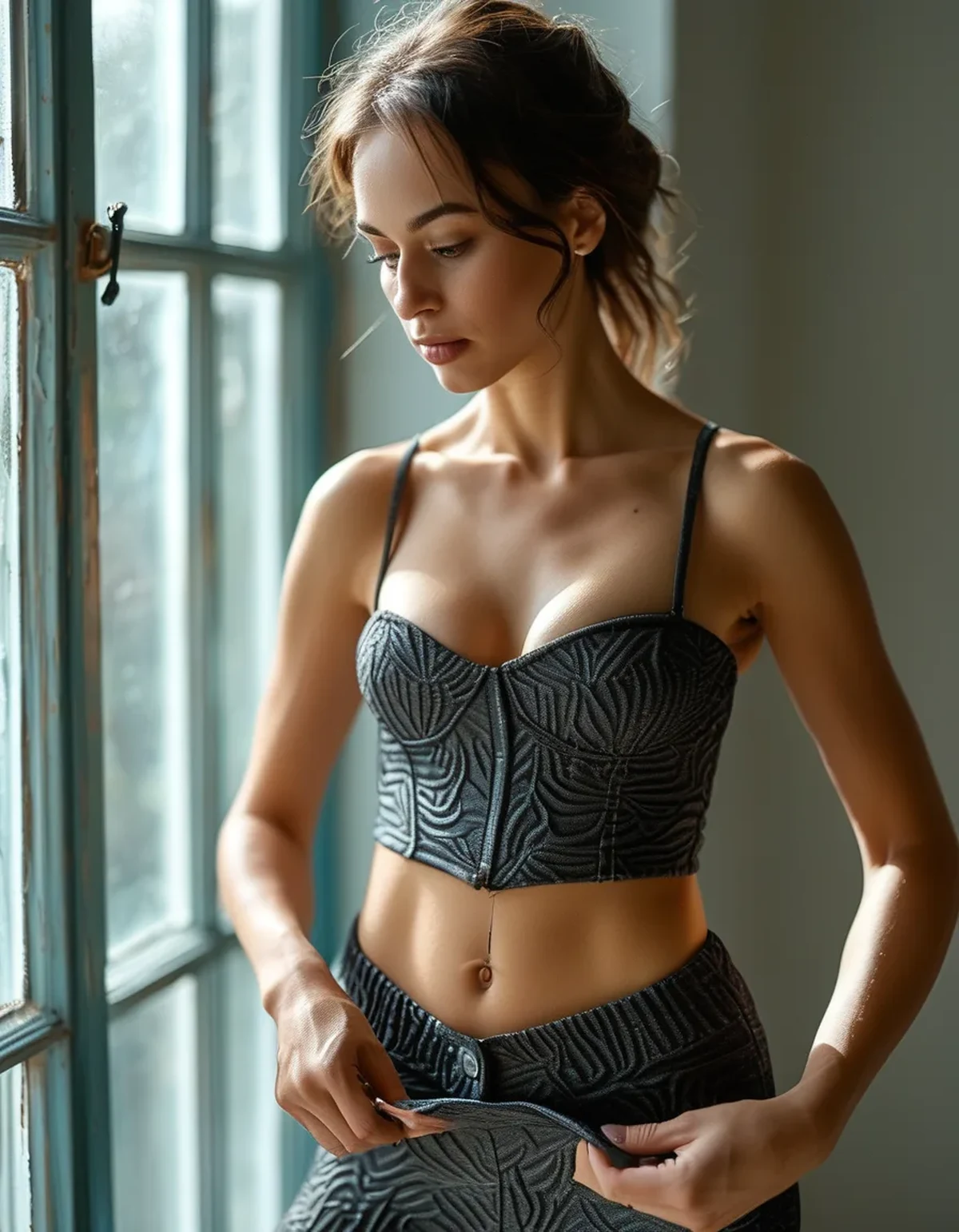
An embossed pattern - whether it is heat-pressed, jacquard-knit or produced by a textured roller - raises portions of the fabric above the base plane. Those raised areas are the only part making contact with a car seat, a bench, or the opposite thigh.
So the same total friction from a day of wear is concentrated onto perhaps 30 to 40 percent of the fabric surface instead of spread across all of it. The contact pressure on those points is correspondingly higher.
Heat-pressed embossing adds a second factor. The pressing process partially melts and flattens the fibers at the raised points, and heat-set synthetic fibers can be slightly more brittle at those exact locations. More friction on a slightly more fragile spot is a predictable outcome.
Where does it show up, and what does the location tell you?
Inner thigh. The most common by far, and driven by walking gait rather than by anything you can adjust. If it is symmetrical, it is normal wear.
Seat and upper back thigh. Chair and car seat contact. If you sit for long stretches, this is the primary site, and it is the one most improved by rotating pairs.
Under a bag strap or waistband edge. Localized and asymmetric - a good sign that a strap or a specific waistband fold is the culprit rather than general wear.
Behind the knee. Usually indicates the pair is slightly long for you, so fabric bunches and rubs against itself.
Asymmetry is the useful signal. Even wear across both legs is the fabric doing what fabric does. Wear on one side only points to something specific - a bag, a car seat bolster, a habit of crossing the same leg - and that is worth changing.

What actually slows it down?
Wash inside out, cold, on a gentle cycle. The single largest factor. Most abrasion in a garment’s life happens in the machine, not on your body, and turning it inside out puts the raised texture against itself rather than against zippers and denim.
Never the dryer. Heat plus tumbling is the fastest pilling accelerator there is. Line dry, and the texture also stays sharper.
Wash with like fabrics. A load with towels or denim is a load full of abrasive surfaces. A mesh bag helps meaningfully.
Rotate pairs. Fibers recover some resilience with 24 hours of rest. Wearing the same pair on consecutive days concentrates stress on identical points before recovery.
Do not pick the pills - shave them. Pulling a pill off drags the fiber it is attached to out of the fabric, which enlarges the thin spot. A cheap fabric shaver removes the ball and leaves the anchor.
Skip the fabric softener. It coats fibers and reduces the surface cohesion that keeps them in place.
What Nobody Tells You About Textured Leggings
Higher spandex content pills more, not less. Elastane fibers are finer and softer than polyester or nylon, so blends with a high stretch percentage feel wonderful and shed fibers more readily. The buttery pair is often the faster-pilling pair.
Darker embossed pairs show it worse. The pills themselves catch light differently than the surrounding fabric, and the contrast is highest on black and deep tones - which is most of the category.
Some early pilling is fiber that was always going to leave. New fabric sheds loose surface fiber in the first several wears and then stabilizes. If pilling appears in week one and then plateaus, that is normal. If it accelerates in month two, that is a fabric quality signal.
Fabric shavers are the most underused garment tool that exists. Ten dollars, three minutes per pair, and it visually restores a legging that most people would have retired. Do it on a flat surface with the fabric held taut and never over a seam.
FAQ: Embossed Legging Wear Questions, Answered
Does pilling mean the leggings are low quality?
Not on its own. All textured knits pill somewhere. What indicates quality is the rate and whether it plateaus - fiber loss that starts fast and then stabilizes is normal, while wear that keeps accelerating past the first month suggests a weaker construction.
Will the embossed texture flatten before it pills?
Often yes, particularly on heat-pressed patterns, and heat is the main cause of both. Skipping the dryer addresses flattening and pilling at once.
Is it safe to use a fabric shaver on stretch fabric?
Yes, with two rules: lay the fabric flat and taut rather than shaving it on your body, and avoid running it over seams or the waistband edge where the guard can catch.
TL;DR:
- Embossed patterns concentrate all contact friction onto the raised areas, so pilling appears there first by geometry, not by defect.
- Symmetrical wear is normal; one-sided wear points to a specific bag, seat or habit worth changing.
- Inside out, cold, gentle, line dry, rotate pairs - the wash routine matters more than how you wear them.
- Shave pills, never pick them, and expect a shed-then-stabilize pattern in the first few wears.
Texture is a trade. You get a pair that reads as more interesting than a flat knit, and you accept that the interesting part wears first. A ten dollar shaver and a cold wash makes that trade a lot better than it sounds.
See It in Motion
Seen here: High Waist 8” Yoga Shorts — shop similar styles on bubblelime.com
Keep Reading
This article is for general informational and styling purposes only. Fit, sizing, and product availability may vary.