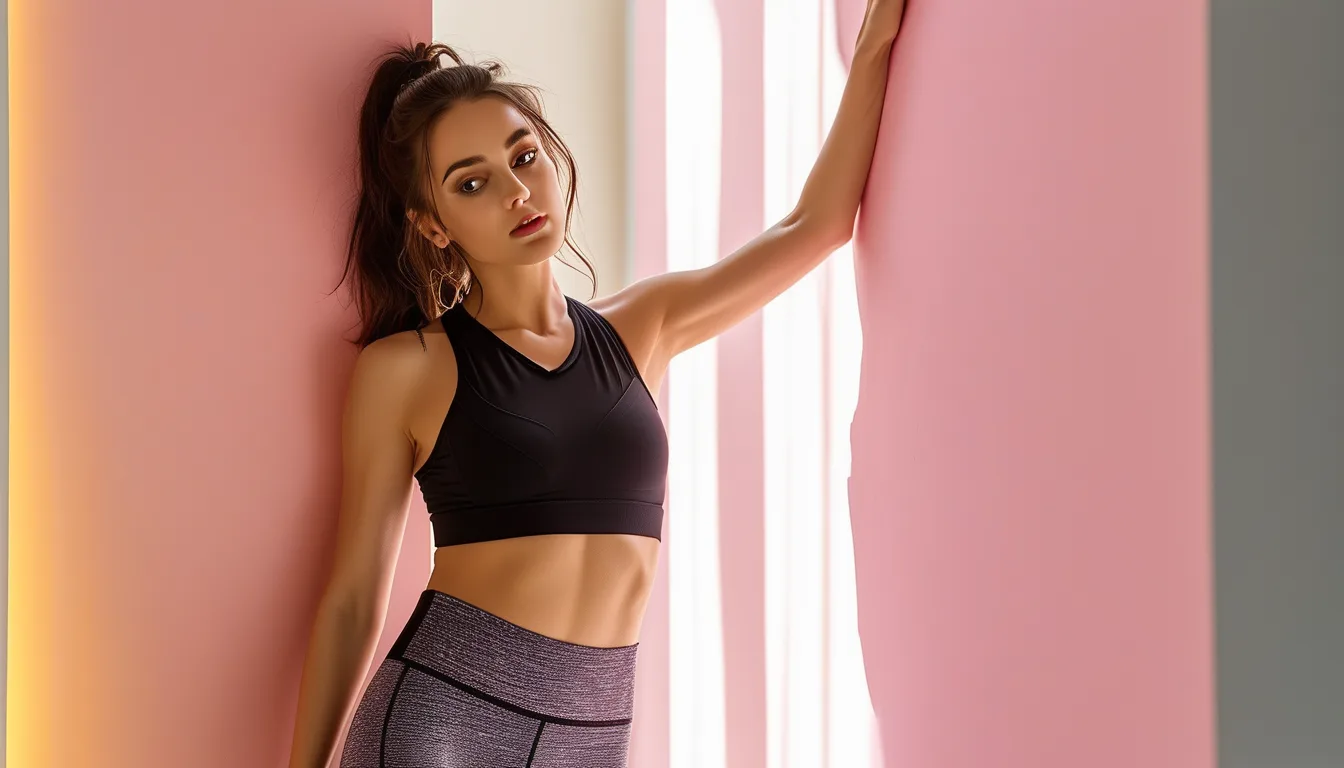
What Happens to Embossed Leggings Under a Fitted Jacket
Quick Answer: Embossed texture depends on raised surface catching light. Put a fitted jacket over the top and two things happen: the pattern under the hem gets crushed flat while you sit, and the visible section below the jacket now competes with a hard horizontal line at the hem. The fix is length choice, not fabric choice - a jacket that ends above the widest part of the pattern repeat keeps the texture reading as texture instead of as a smudge.
You wore them all summer and they looked exactly like the product photo.
Now there is a jacket involved, and somehow the same pair reads flat.
It is not the leggings. It is what layering does to raised fabric.
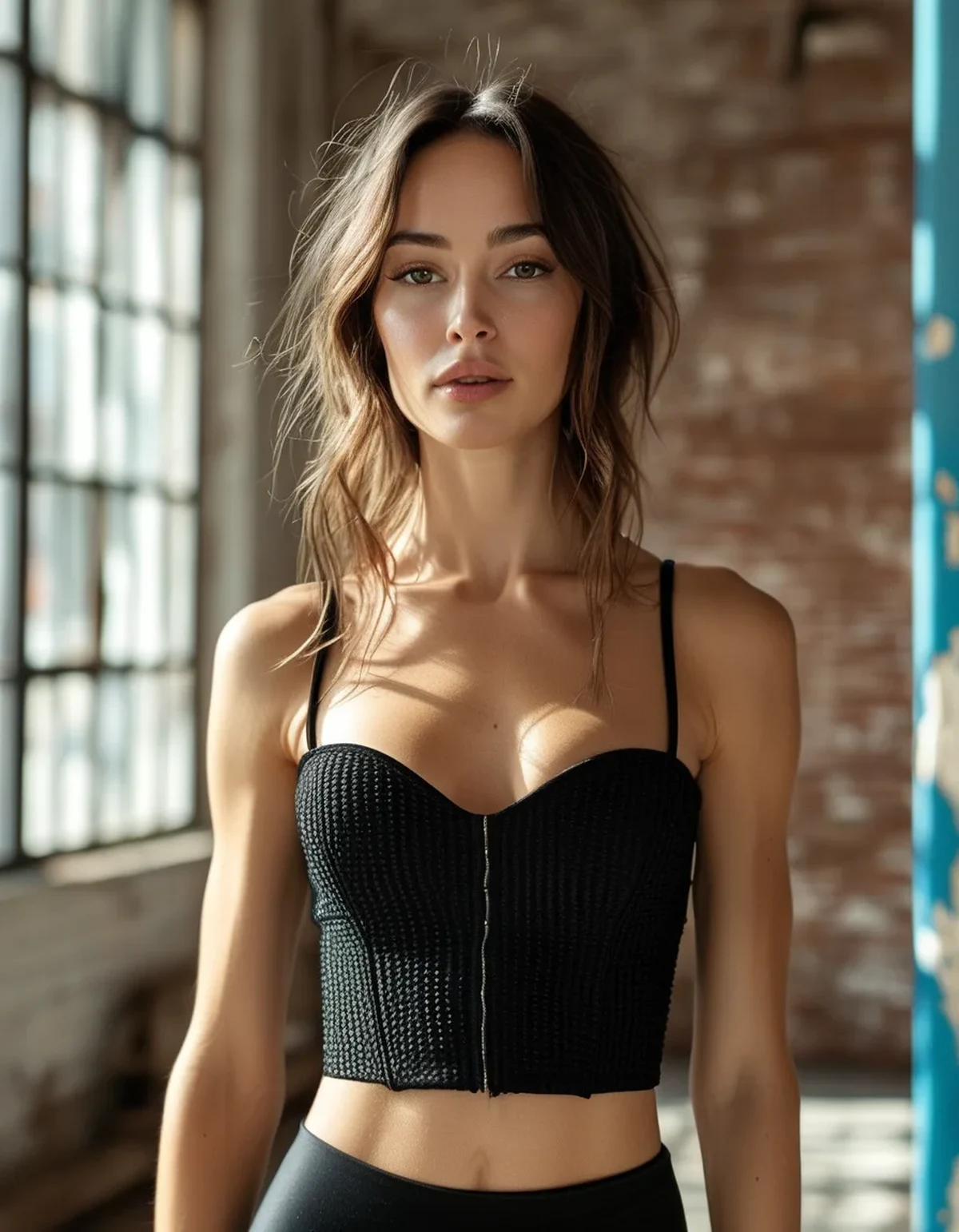
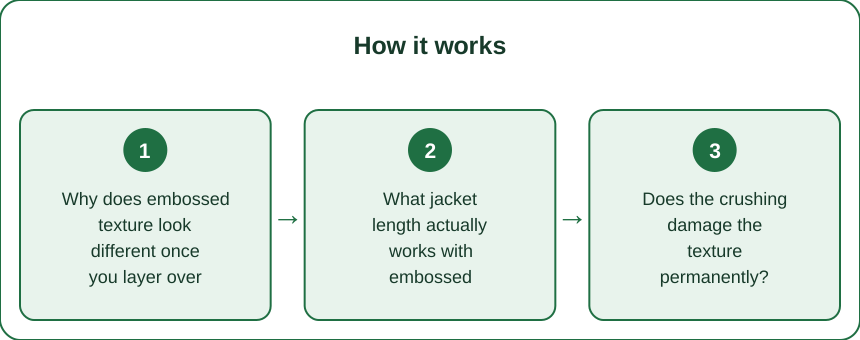
Why does embossed texture look different once you layer over it?
Because the pattern is a light effect, not a colour effect.
Embossed fabric works by having raised and recessed areas that catch light at different angles. What you read as pattern is really a set of tiny shadows. Remove the light source or flatten the raised part, and the pattern effectively disappears.
A jacket does both. It shades the section directly under the hem, and it presses the fabric flat wherever it overlaps - which is exactly where most people look first.
There is a second effect that catches people out. A fitted jacket creates a hard horizontal line across the leg, and the eye reads that line before it reads the texture. Pattern below a strong horizontal reads as a separate block rather than as a continuous surface.
Which is why the same leggings can look expensive in a crop top and cheap under a bomber. Nothing changed except what is sitting above them.
The practical version:
- Longer jackets flatten more pattern area, so the visible texture has to work harder
- Stiffer jacket fabrics press harder than soft knits and crush the raised areas more
- A jacket hem that lands mid-thigh cuts the leg at the point where embossed patterns are usually most visible
What jacket length actually works with embossed leggings?
Shorter than you would pick for plain leggings, and it is a bigger difference than it sounds.
Cropped and just-past-waist jackets work best, because they leave the entire leg as one uninterrupted textured surface. The pattern gets to run the whole length, which is how the design was intended to be seen.
Mid-hip is the awkward zone. It covers the upper thigh - the widest, flattest, most light-catching part of the leg - and leaves you with texture from mid-thigh down, which looks like the pattern started halfway through.
Long jackets past mid-thigh actually work again, oddly enough. Once enough leg is covered, the visible section reads as a deliberate slim column rather than as an interrupted pattern. The failure mode is the middle.
A rough rule that holds up: cover less than a quarter of the leg or more than half. The range in between is where embossed pairs look worst.
On fabric weight: a soft unstructured jacket sits on the texture; a stiff structured one presses it. If you only own one jacket for this, an unstructured one is more forgiving with any raised fabric.
One more thing worth knowing: the crush from sitting is temporary on good fabric and semi-permanent on cheap fabric. A quality embossed knit recovers within a few minutes of standing. If yours still shows a flattened seat area an hour later, that is a fabric-quality signal, and it will get worse with wear.
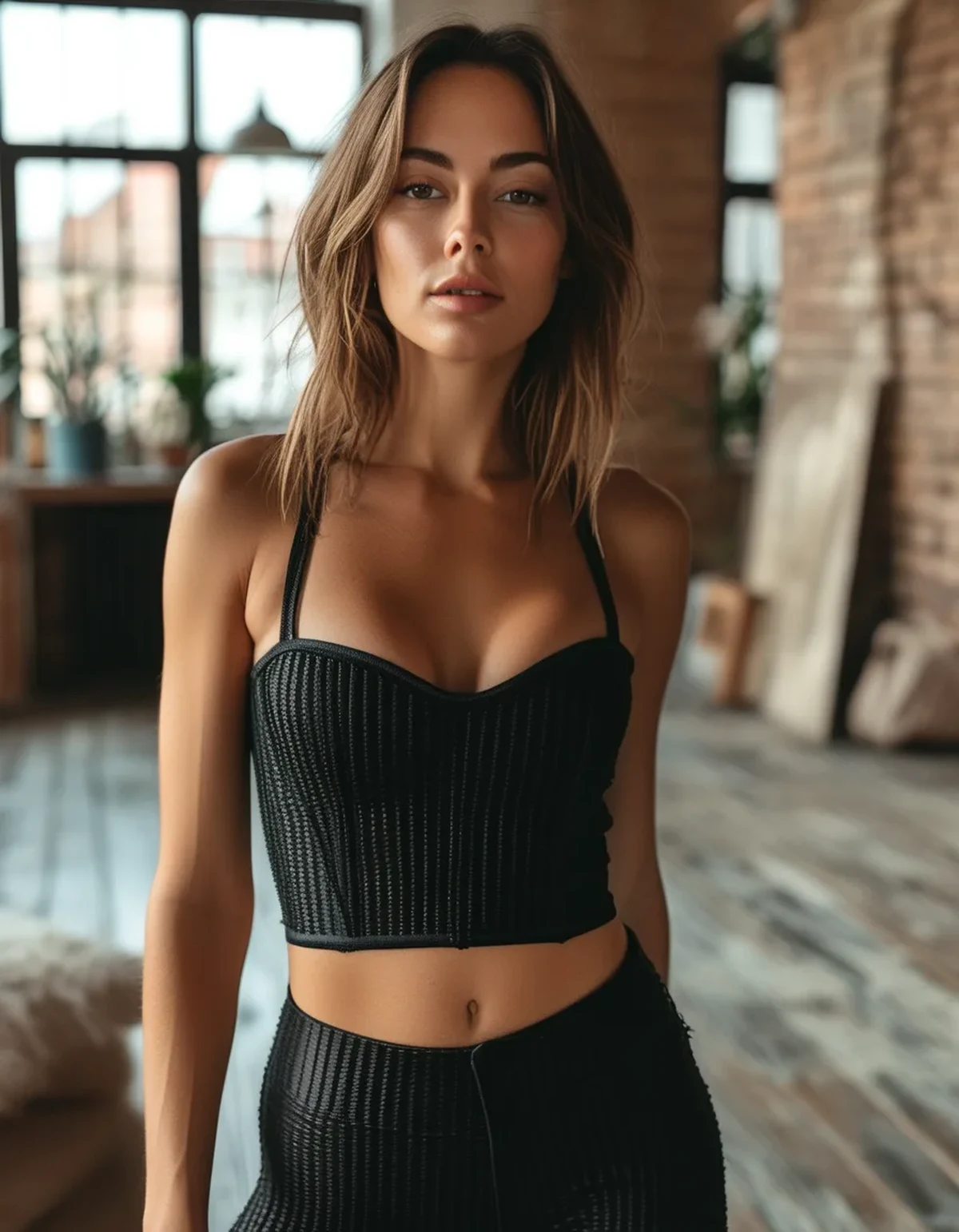
Does the crushing damage the texture permanently?
Sometimes, and it depends almost entirely on how the texture was made.
There are two broad ways to get embossed fabric. Heat-pressed embossing stamps the pattern into a flat knit - fast, cheap, and it relaxes out over time, particularly with heat and pressure. Knitted-in texture builds the pattern into the fabric structure itself and does not relax, because there is nothing to relax back to.
How to tell which you have without a label: stretch a section hard and watch the pattern. Heat-pressed texture visibly flattens under stretch and looks washed out. Knitted-in texture stays proportional - it gets bigger, but it stays crisp.
What accelerates the loss on heat-pressed pairs:
- Hot washes and any tumble drying - heat is literally the mechanism that put the pattern there, and more heat takes it out
- Sitting for long periods in stiff outer layers, which is a pressure-plus-body-heat combination
- Folding along the same lines repeatedly in a drawer
What preserves it: cold wash, inside out, hang dry, and stored rolled rather than folded. This is not fussy laundry advice - on a heat-pressed pair it is the difference between one season and three.
And the honest note: if the pattern already looks faint after a few washes, it was heat-pressed and it will keep fading. No care routine reverses it. Worth knowing before you buy the next pair rather than after.
Myth vs Fact: Embossed Leggings and Layering
Myth: Texture makes leggings look thicker. Fact: Raised texture actually breaks up light and tends to look less clingy than a flat matte knit, which is part of why embossed pairs are popular. It is the layering that changes the read, not the texture itself.
Myth: A longer jacket is always the safer choice. Fact: Mid-thigh is the worst length for embossed pairs specifically, because it cuts across the most visible pattern area. Long or cropped both work better than the middle.
Myth: All embossed leggings are the same. Fact: Heat-pressed and knitted-in texture behave completely differently over time. One fades and one does not, and the price tag does not reliably tell you which is which.
Myth: If the pattern flattens after sitting, they are ruined. Fact: Short-term flattening is normal on all textured knits. The question is whether it recovers within minutes. Permanent flattening is the actual failure signal.
Myth: Texture hides everything. Fact: Embossed patterns hide small surface things well and highlight seam distortion badly. A pattern that runs off-line at the seam is more obvious on textured fabric than on plain.
Myth: You need to match the jacket texture. Fact: Contrast works better. A smooth jacket over textured legs reads intentional; texture over texture usually reads busy unless the scales are very different.
FAQ: Embossed Leggings Layering Questions, Answered
Can I wear embossed leggings with a chunky knit?
Yes, and it is one of the better pairings, because a loose knit does not press the texture flat the way a structured jacket does. Keep the knit either cropped or long enough to pass mid-thigh.
Why do mine look flat in photos but fine in the mirror?
Phone cameras flatten the shadows that create the pattern, particularly under overhead lighting. Side lighting from a window brings the texture back. It is a lighting issue rather than a fabric one.
Do embossed leggings pill faster than plain ones?
They can, because the raised areas take more friction contact than a flat surface would. The high points wear first, which is why pilling on embossed pairs tends to follow the pattern.
Are they warm enough for autumn on their own?
Usually about the same as a plain pair of the same weight - the texture adds almost nothing thermally. Weight and fabric content matter far more than surface treatment.
How do I stop the seat area looking crushed after a commute?
Hang them for ten minutes rather than putting them straight in a bag, and avoid tumble drying entirely. Most of the crush recovers on its own if the fabric is decent.
TL;DR:
- Embossed pattern is a light-and-shadow effect, so anything that shades or presses it makes it read flat
- Jacket length is the main variable: cover less than a quarter of the leg or more than half, and avoid mid-thigh
- Unstructured jackets press the texture less than stiff structured ones
- Heat-pressed texture fades permanently with heat and pressure; knitted-in texture does not
- Stretch-test the pattern to tell which you own - washed-out under stretch means heat-pressed
- Cold wash, inside out, hang dry, store rolled
The leggings are almost never the problem. The thing sitting on top of them usually is.
See It in Motion
Seen here: High Waist Yoga Leggings with Side Pockets — shop it on bubblelime.com
Keep Reading
This article is for general informational and styling purposes only. Fit, sizing, and product availability may vary.